





Introduction
Physical clinics and hospitals are no longer the only centers in which healthcare can be delivered. Today, telehealth companies are transforming the process of patients contacting doctors, specialists, and care providers all at the comfort of their homes. This transformation has been occurring at a rate of acceleration because of the insistence by patients to gain access to care faster, conveniently and through continuation of care.
Telehealth businesses offer technology and services which allow virtual care, home monitoring, online prescriptions, and follow-up services. To the providers, telehealth enhances efficiency and increases coverage. To the patients, it eliminates the obstacles of travelling, decreases the time of waiting and amplifies the availability of qualified medical practitioners.
Telehealth operations with healthcare virtual assistants are also supported by many healthcare organizations to coordinate patient appointments, health records, and patient coordination in various digital workflows.
We will examine the nature of the telehealth companies, their significance, and how they are transforming the future of healthcare provision.
Telehealth Company Practices Throughout the Care Pathway
Telehealth businesses are not simply about video calls – they provide a whole digital health ecosystem that reaches out to patients pre-consultation, during, and after the meeting.
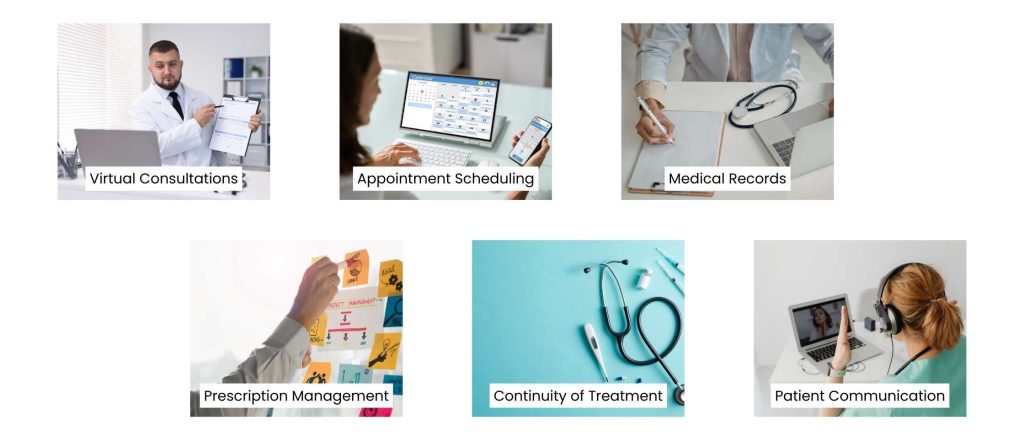
Core operations defined effectively:
- Virtual Consultations: The patients are referred to licensed medical professionals through secure video or audio calls.
- Appointment Scheduling: Digital systems enable patients to make appointments, reschedule appointments, and make appointments without any human intervention.
- Medical Records: The records of consultation, diagnosis, and treatment plans are digitally stored in the systems.
- Prescription Management: Physicians are required to write electronic prescriptions which are transmitted to pharmacies.
- Continuity of Treatment: Virtual check-ins and automated reminders will guarantee adherence to treatment.
- Patient Communication: Secure messaging helps to keep patients updated and involved in the process of care.
Telehealth workflows are frequently combined with CRM data entry support to maintain accurate and centralized records of patients among the healthcare providers.
Meanwhile, telehealth is most effective when there is a seamless interplay between clinical care and digital coordination.
Also Read: Affiliate Marketing Consultant
The Reason to Collaborate Healthcare Providers with Telehealth Companies
Many providers are no longer willing to adopt telehealth as an option anymore, but as a strategic requirement. Telehealth companies assist healthcare organizations to scale their care delivery without compromising quality and compliance.

Main motives practice providers have to use telehealth:
- Increased Reach to Patients: The providers are able to reach patients across geographic boundaries.
- Operational Efficiency: Virtual visits decrease the clinic traffic and the administrative burden.
- Less Care cost: Remote visits decrease overhead costs on the part of the provider and patient.
- Better Patient Engagement: Accessibility facilitates the process by making patients seek care earlier.
- Continuity of Care: The chronic conditions are sustained through continued observation.
Many providers pair virtual care initiatives with consulting and strategy services to design scalable digital healthcare models. This approach enables care teams to expand access and efficiency while maintaining high standards of quality and patient experience.
Telehealth companies have improved patient experience
Telehealth eliminates most of the frustrations that come with the traditional healthcare systems as perceived by the patient.

Patient-centered improvements are:
- Fewer Waiting Times: Virtual appointments do not have long queues in the clinic.
- Availability of Convenience: Patients can visit consultations at home or at work.
- Improved Reminders: Digital reminders will guarantee adherence to treatment.
- Specialist Access: The underserved populations and rural groups obtain access to specialists.
- Comfort & Privacy: Patients are more comfortable talking about health issues without meeting face to face.
Communication with customer support virtual assistants will guarantee timely responses, appointment reminders, and follow-up coordination and support to the patients.
Telehealth businesses do not only add value to healthcare in a clinical context but in experience.
Also Read: Ask Engine Optimization AEO
Who benefits from a telehealth company?
Telehealth does not belong to a specific segment of healthcare. It is flexible to the benefit of various stakeholders in the ecosystem.

Telehealth is Ideal For:
- Primary Care Clinics: Provide routine check-ups at remote locations, enhancing both access and convenience by patients.
- Mental Health Providers: offer therapies and counseling sessions over the internet and serve more patients in an effective way.
- Chronic Care Programs: Check in and track data regularly with virtual check-ins and monitoring of long-term conditions.
- Elderly Care Services: Assist patients who are mobile impaired, which will decrease the number of visits.
- Premier Practices: Follow-ups, second opinions and remote consultations are delivered conveniently and accurately.
It is also the case that many telehealth providers are using IT maintenance services in order to maintain platforms secure, compliant, and available 24/7. Telehealth businesses enhance the provision of care without affecting reliability.
Important Factors to Consider When Selecting Telehealth Companies
Telehealth providers are not of the same quality, security, and operational support. It is very important to select the correct partner.

What healthcare institutions are supposed to consider:
- Regulatory Compliance: Conformance to the HIPAA and healthcare data protection standards.
- Platform Reliability: steady availability and high-performance.
- User-Friendliness: Pareto interfaces on both the patient and provider side.
- Integration Facilities: Interoperability with the current healthcare systems.
- Infrastructure Support: Technical and operational support.
Telehealth companies must be long term partners rather than software vendors
Conclusion
There is a revolution in healthcare delivery, and telehealth companies are the pace setters of the revolution. Telehealth is transforming healthcare into an inclusive, efficient, and responsive field by allowing patients to consult remotely, enhancing patient access, and simplifying care coordination.
To providers, telehealth is opening up new avenues of growth without the need to strain its operations. It is convenient, comfortable, and quicker in accessing care by the patients.
In Tasks Expert, healthcare organizations enhance telehealth services by virtual assistants that help in scheduling, documentation, patient coordination and continued operation management.
Telehealth is not a fad, it is the future of healthcare provision.
Frequently Asked Questions
They offer digital patient care and remote healthcare consultation platforms and services.
Yes. Established telehealth firms have strict rules on healthcare data protection and privacy.
Telehealth supplements face-to-face care, but not physical examinations in the cases where they are necessary.
The most benefited ones are primary care, mental health, chronic care management, and follow-up consultations.
Yes. Tasks Expert is offering virtual assistants in healthcare to schedule, coordinate, document, and support patients.
About Us
Tasks Expert offers top-tier virtual assistant services from highly skilled professionals based in India. Our VAs handle a wide range of tasks, from part time personal assistant to specialized services like remote it support services, professional bookkeeping service etc. Furthermore, it helps businesses worldwide streamline operations and boost productivity.
Ready to elevate your business? Book a Call and let Tasks Expert take care of the rest.

About Author