




Introduction
AI executive assistants are changing how contemporary executives and leaders handle scheduling, communications, and priorities. These tools are designed to do a lot more than automate a simple task. They learn and adapt to how you lead. They adjust to your decisions, your preferences, and how you assign tasks over time.
This is not instant customization. It is a sophisticated system that relies on actions and results to create a personalized interface. Every time you cancel a meeting, hit ignore on a notification, and mark a contact as a priority, a feedback mechanism is at work. Every ignored meeting and notification is tuned to a system designed to learn and adjust how it renders support.
With consistent use, AI starts to adapt to your preferences, such as leaning into your workflows, optimal focus periods, meeting structures preferred, and more. The right AI executive assistant tool does not merely enhance productivity; it aids in the creation of a digital partner that adapts to your working style.
This blog focuses on feedback loops and their role in the growing effectiveness of AI tools for executive assistants. We will discuss the unending potential for learning that AI tools have the longer they are in use.
Feedback Loops: The Heart of Adaptive AI
Every great executive assistant, whether human or AI, learns by observation. The same applies to an AI executive assistant; it may start as a generalist tool, but it quickly becomes something far more powerful through feedback loops. These loops serve as the foundation for how it starts to comprehend and adjust to your leadership style.
Every action you take when using an AI executive assistant, such as rescheduling meetings, ignoring alerts and repeated calls, or replying to messages in a particular way, sends a signal. These signals are monitored and utilized to improve the way the assistant helps you. This ongoing learning eventually creates a distinct behavioral model of your preferred way of doing things.
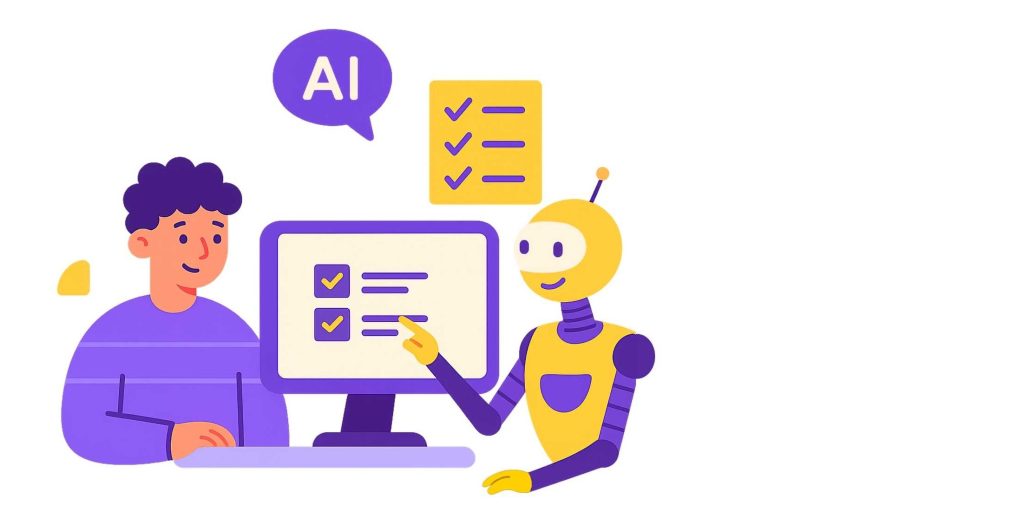
In practice, that looks like this:
- The system learns when you require deep focus time and starts to block distractions; it also starts to prioritize meetings that you rarely miss.
- It adjusts the length of breaks between meetings based on how often you push things back.
- It detects who requires priority scheduling.
- It recognizes when to surface reminders and when to stay silent.
Unlike basic automation, executive assistant AI evolves. It doesn’t just do what you say, it anticipates what you need, based on how you’ve responded in the past.
This is where the best AI executive assistant stands out. It reduces cognitive load and makes space for smarter decisions like a teammate.
Today’s leaders are stretched across meetings, strategy, and constant decision-making. Having an assistant who learns through real engagement is a game-changer. It’s not just productivity—it’s precision, built around you.
Preference Recognition and Context Awareness
While feedback loops help an AI executive assistants react to your behavior, preference recognition, and context awareness help it predict your next move. This is where AI begins to feel personalized and smart.
Step by step, it begins to map how you work, when you’re most productive, and how you like things done. These subtle patterns form the deeper customization, without the manual rules.

Here’s what preference recognition looks like in action:
- You consistently schedule deep work in the mornings. The assistant begins protecting that time automatically.
- You prefer 30-minute meetings over hour-long blocks. Over time, it adjusts default durations.
- You often reschedule Friday calls to Monday. The assistant learns to deprioritize end-of-week meetings.
- You respond quickly to messages from your CEO but slowly to vendor emails. The assistant starts flagging high-priority senders.
Context awareness builds on this by understanding who and what matters most. Many AI tools for executive assistants analyze:
- Relationship priority: Who are your key clients, stakeholders, or team leads?
- Tone adaptation: Do you use formal language with clients and a casual tone internally?
- Meeting intent: Are recurring meetings skippable, or do they require follow-through?
The best executive assistant AI tools combine time patterns, communication behavior, and engagement history to make smart decisions. They don’t just know your calendar—they understand how you operate.
This results in:
- Better scheduling decisions based on how your energy flows through the day.
- Drafted messages that reflect your voice and audience.
- Prioritized task suggestions that align with your goals and deadlines.
Gradually, your AI executive assistant starts functioning like a human assistant who has been working with you for years, learning through repetition, and adjusting to serve you better each week.
Building Trust Through Predictability
One of the most overlooked strengths of an AI executive assistant is its ability to build trust— not just through smart features, but through consistent, reliable behavior. In the early days, it might feel like any other productivity tool. But as it starts mirroring your preferences and showing up exactly how you expect, trust naturally begins to grow.
Every correctly scheduled meeting, well-timed reminder, or properly prioritized follow-up adds another layer of confidence in its performance. Over time, this consistency turns into dependability.

Here’s how that trust is built in real-world use:
- Prefer 15-minute buffers between meetings. The assistant begins scheduling them by default—no extra input needed.
- Skip Friday meetings. The assistant starts blocking off your Fridays automatically.
- Respond faster to executive team emails. The assistant starts surfacing those at the top of your inbox.
- Cancel last-minute back-to-backs. The assistant starts recognizing and avoiding tight scheduling conflicts altogether.
Predictability builds confidence. You don’t have to double-check reminders or restructure your calendar at the last minute. The assistant gets it right, because it’s been learning how you operate.
That predictability leads to greater delegation:
- Start trusting it with meeting prep and summaries.
- Allow it to auto-prioritize messages from top stakeholders.
- Rely on it for follow-up reminders and deadline nudges.
The best executive assistant AI needs to be consistent. And once it proves that consistency, it shifts from being a tool you use to a system you depend on.
In high-stakes roles filled with fast decisions and nonstop input, that kind of predictability is powerful. It’s what allows leaders to move faster with fewer distractions, knowing their assistant is quietly keeping everything on track behind the scenes.
Learning Through Natural Workflow Integration
One of the most powerful aspects of an AI executive assistant is how it learns without being explicitly trained. Unlike traditional software that requires setup, rule-building, and manual input, modern executive assistant AI integrates into your workflow and simply watches how you operate.
From there, it starts building a real-time behavioral model—understanding not what you say you prefer, but how you work day to day.

Here’s how this natural learning unfolds:
- Task behavior tracking: AI tracks how you finish or redistribute tasks. It learns to prioritize by keeping track of pending and completed tasks.
- Communication analysis: By connecting to your Teams, the assistant can determine your preferred channels of communication, response time trends.
- Calendar rhythm mapping: It tracks the times you attend meetings, move, or cancel, among other time allocations. This aids in its comprehension of your workflow, optimal meeting lengths, and desired time between appointments.
- Tool-level learning: The assistant’s comprehension of your workflow increases with its level of integration with your digital ecosystem (such as Asana, Google Calendar, Zoom, and CRM).
The result?
- It avoids overbooking your focus hours.
- It reminds you of tasks aligned with your pace, not someone else’s.
- It streamlines scheduling, follow-ups, and communication patterns based on what feels natural to you.
Unlike static assistants that follow generic rules, the best AI tools for executive assistants offer an experience that gets sharper the longer you use them. They adapt quietly in the background— no micromanagement, no settings toggles—just a learning engine that builds around your leadership DNA.
After a few weeks, you stop using the assistant consciously. It simply becomes part of your daily routine, keeping your day aligned and your attention where it’s needed most.
Balancing Automation with Human Oversight
While AI executive assistants are designed to automate repetitive tasks and make decisions based on behavior, the most effective systems are built to work with you. The key is balance. Automation handles the heavy lifting while humans look after creative tasks and align the system with your goals.
From day one, your input plays a vital role in how the assistant evolves. You don’t have to micromanage it—but when you do intervene, the system learns fast.

Here’s how this human-AI partnership works in practice:
- Corrections are learning opportunities: If your AI assistant schedules a call too early or reminds you too frequently, you can make a manual adjustment. That feedback loop helps it avoid repeating the same action.
- Tone refinement through guidance: If you edit email drafts or change wording, the system learns your preferred communication style and adapts future messages accordingly.
- Manual tagging: You can tag VIP contacts or critical projects and meetings. Slowly but surely, the AI uses these cues to fine-tune prioritization rules.
- Control settings for sensitive actions: While the assistant can suggest time slots or reply drafts, final control remains with you. You choose when automation runs solo and when approval is needed.
This shared control helps avoid over-automation—the kind that makes people nervous or forces you to undo machine-generated decisions. Instead, the assistant becomes smarter because of your oversight, not despite it.
The best executive assistant AI platforms are designed to be coachable. They’re not rigid systems with fixed rules—they’re dynamic, learning companions that get sharper with your involvement. And you don’t need to constantly manage them. Just a few corrections here and there shape long-term behavior.
The outcome? A system that doesn’t just automate, but aligns. You stay in control, while the assistant continuously improves—bringing precision and personalization to every corner of your workflow.
Conclusion
AI executive assistants are intelligent systems that become dependable collaborators the more you work with them; they are more than just time-savers. These tools learn how you lead, when to take action, when to back off, and how to support your rhythm, through feedback loops, preference recognition, natural workflow integration, and clever customization.
What starts as a digital tool gradually evolves into a personalized assistant that values your time and advances leadership goals. In addition to automation, you also get consistency and more time for strategic work.
The assistant grows with you, learning from every message, calendar entry, and decision. You keep control while the assistant gains proficiency in the background.
An AI executive assistant can be a game-changer in a world where every second matters. The goal is to improve the human touch through intelligence, customization, and dependability rather than to replace it.
Adaptive executive support is already a thing of the future.
About Us
Tasks Expert offers top-tier virtual assistant services from highly skilled professionals based in India. Our VAs handle a wide range of tasks, from part time personal assistant to specialized services like remote it support services, professional bookkeeping service etc. Furthermore, it helps businesses worldwide streamline operations and boost productivity.
Ready to elevate your business? Book a Call and let Tasks Expert take care of the rest.

About Author

Gary Katz
Related Blogs