Introduction
The real estate chatbot has become an essential utility for agencies, brokers, and property developers who desire more timely lead responses and improved qualification. The buyers of property want to have quick responses in the year 2026. They do not wait until they receive a call back, email, or office visit. In case a site or listing is unable to respond instantly, the lead is lost.
The real estate business is associated with a lot of inquiries, repetition of questions, and follow-ups. Human teams are not able to scale effectively without delays or lost opportunities. This is where the AI-powered chatbots come in. They become the initial interface to contact, interact with visitors, gather the requirements, and filter serious prospects and casual users.
Here, the explanation of how chatbots will be applied in real estate in 2026, which issues the chatbots will address, and the reason why the chatbots will become an integral part of modern real estate operations and not a marketing experiment will be explained.
Why Real Estate Lead Handling Is Broken Without Automation
The sales of real estate are a matter of time. In most cases, the initial reaction will either make a lead convert or the lead will vanish.

The issues that agencies encounter commonly are:
- Slow response to Web site and list applications.
- Agents are wasting time on the same queries.
- Poor leads filling CRMs.
- Failure to follow up after the first contact.
By 2026, consumers shop for property at night, across time zones, and on various devices. A real estate chatbot will make sure that all queries are processed on the spot and without time- or channel-related constraints. Chatbots save the time of the agents instead of substituting them by filtering out noise and getting serious prospects first.
Also Read: Public Records Software
The real workings of a Chatbot in Real Estate in 2026
The current state of the chatbots in real estate goes much beyond question answering. They operate as lead qualification and engagement systems.
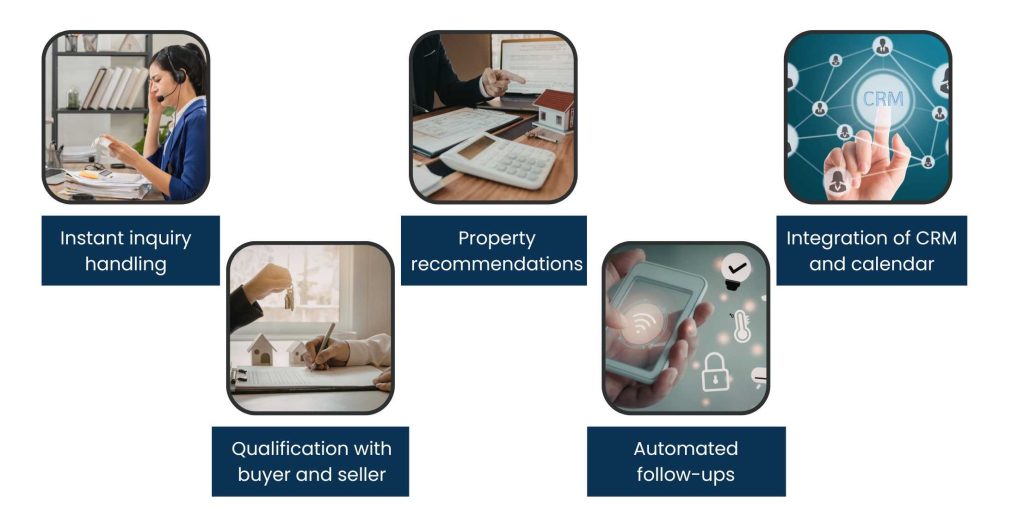
Key capabilities include:
- Instant inquiry handling: Reaction to questions about property whenever the user visits a website or listing.
- Qualification with buyer and seller: Inquiring about budget and place of choice, schedule, and purpose.
- Property recommendations: Offering appropriate listings depending on user feedback.
- Automated follow-ups: Delivering reminders, updates, and next steps automatically.
- Integration of CRM and calendar: Agents with full context are the direct result of passing the qualification.
By 2026, chatbots are thoroughly embedded in websites, WhatsApp, Facebook Messenger, and CRM systems, and provide a consistent channel experience.
How Chatbots Improve Real Estate Lead Quality
The amount of lead volume does not drive sales. Quality does.
A real estate chatbot is better at refining lead quality through introducing structured conversations prior to agent assistance.
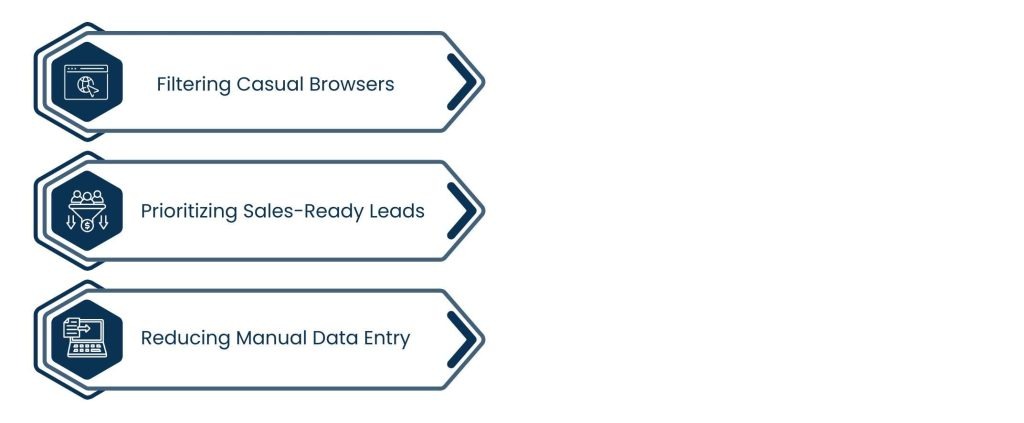
1. Filtering Casual Browsers
There are numerous tourists who are window shopping. Chatbots recognize intent early by proposing the correct questions.
- Buying vs renting
- Budget range
- Preferred location
- Timeline to move
2. Prioritizing Sales-Ready Leads
Clarity of intent is indicated and diverted instantly to agents to enhance the quality of response and eliminate opportunities.
3. Reducing Manual Data Entry
Instead of general messages of inquiry, agents are provided with clean and ordered data on leads.
The change allows sales staff to engage in meaningful conversations, rather than screening.
Also Read: Digital Advertising Intelligence
Chatbot for Real Estate vs Traditional Lead Forms
Traditional lead forms struggle to keep up with how modern buyers behave. A chatbot for real estate adapts in real time, which directly impacts engagement and conversion.
| Aspect | Traditional Lead Forms | Chatbot for Real Estate |
|---|---|---|
| User Experience | Static fields that feel transactional | Conversational and interactive |
| Response Time | Delayed. Depends on manual follow-up | Instant. Responds in real time |
| Lead Qualification | None or minimal | Asks budget, location, timeline, intent |
| Completion Rate | Low due to long forms | Higher due to guided conversation |
| Follow-Up Handling | Manual and often missed | Automated follow-ups and reminders |
| Lead Routing | Generic CRM entry | Smart routing to the right agent |
A chatbot adapts based on user responses, while a form treats every visitor the same. In 2026, that difference directly affects lead quality, response speed, and deal conversion.
Chatbot Use Cases in the Real Estate Business
Chatbots are applied in various property situations.
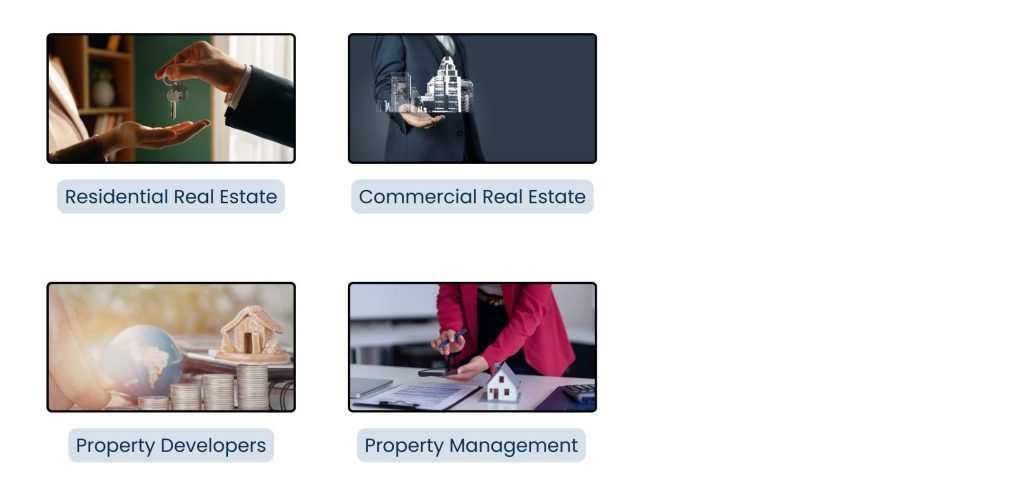
1. Residential Real Estate
- Property search assistance
- Scheduling site visits
- Buyer qualification
2. Commercial Real Estate
- Attracting attention of the investors.
- Pre-qualification of business requirements.
- Brochure sharing and distributing documents.
3. Property Developers
- Handling launch inquiries
- Filtering serious buyers
- Dealing with large campaigns.
4. Property Management
- Tenant inquiries
- Routing of maintenance requests.
- Rent and policy FAQs
In both instances, the chatbot saves on work, but also enhances the consistency of the responses.
How Chatbots Fit Into Real Estate Sales Operations
Chatbots are not independent tools in 2026. They belong to a larger system of operation.

An average flow is of the type:
- The user communicates with the chat robot.
- Chatbot qualifies and collects information.
- Lead is pushed to CRM
- Context-rich notification is received by the agent.
- The agent is interested in closing, not screening.
Most agencies use chatbots alongside remote administrative or virtual assistant assistance to control listings, CRM updates, and follow-ups, building an entirely streamlined sales process.
Common Mistakes Real Estate Businesses Make With Chatbots
Chatbots do not work correctly when applied inadequately.
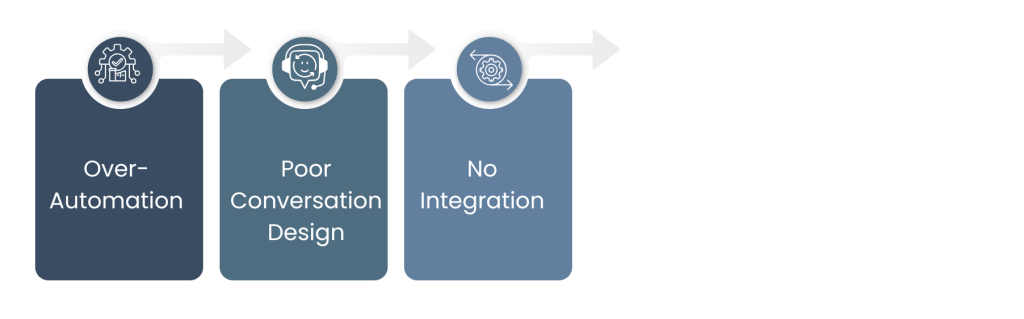
1. Over-Automation
The obligatory substitution of human interaction with a complete replacement results in frustration. Chatbots will facilitate and not hinder access to agents.
2. Poor Conversation Design
Copies scripts are murders of interest. Chatbots need to have the real buyer language and intent.
3. No Integration
Another tool that is not integrated with CRM and calendars is a chatbot that is disconnected.
Effective real estate chatbots are built based on sales processes, rather than marketing.
How to Select the Right Chatbot in 2026
Businesses must not choose a chatbot solution based on the features, but on the results.

Key evaluation points:
- The skill to be qualified is stupidly intelligent.
- CRM and messaging app integration.
- Conversation flows that are customizable.
- Performance tracker and analytics.
- Human handoff capability
This is aimed at making the purchasing process more convenient to buyers and enhancing the efficiency of the agents.
Chatbot's future in Real Estate after 2026
Chatbots will keep improving with a more advanced AI.

Emerging trends include:
- Voice-operated real estate agents.
- Predictive lead scoring
- Optimization of follow-up using AI.
- Buyer engagement in more than one language.
With more and more competition, those real estate businesses who take longer to adopt, will be left behind those who are more flexible and enabled by technology.
Conclusion
A chatbot in real estate is not a nice-to-have product anymore. It will serve as the initial point of sale in 2026, responding to inquiries, referencing prospects, and notifying leads will not go unanswered. Chatbots also enable agents to work on what they are better at, which is closing deals and building relationships, since robots can automate repetitive interactions and enhance the quality of leads.
The true worth is to apply chatbots to a system of organized sales and operations and not to use it as an isolated tool. The real estate companies that do this will have a quicker response time, increased conversion rates, and utilize their staff better. We help businesses at Tasks Expert to achieve sustainable growth by creating efficient workflows that are both technology-driven and human-involved.
Frequently Asked Questions
It is a machine-assisted system based on AI technology, which is capable of identifying leads, managing the qualification, and guiding the sales department.
No. They assist agents with preliminary dialogue and lead qualification.
Yes. Contemporary chatbots are integrated into websites, WhatsApp, and chats.
Yes. They enable small teams to compete and automate to handle leads and follow-ups.
Immediately. Chatbots respond instantly, 24/7.
About Us
Tasks Expert offers top-tier virtual assistant services from highly skilled professionals based in India. Our VAs handle a wide range of tasks, from part time personal assistant to specialized services like remote it support services, professional bookkeeping service etc. Furthermore, it helps businesses worldwide streamline operations and boost productivity.
Ready to elevate your business? Book a Call and let Tasks Expert take care of the rest.

About Author

Gary Katz
Related Blogs