Introduction
In an era where digital transformation is key to success, software products are the backbone of many business operations. It does not matter whether you are developing a new mobile application, SaaS system, or an advanced enterprise solution; the quality of its design, development, and maintenance determines the success of your product.
Developing software products is not just about writing code. It is all about market needs comprehension and creating a smooth user experience, selecting the right technologies, and making the software scalable and secure. Businesses with this number of moving parts usually seek the services of professional software product development to help them go through it.
It is in this extended manual that we will dive into the most crucial phases of software product development services, the technology used, and how companies can utilize professional development services to develop products that satisfy the customer, scale to capacity, and are secure and compliant in the long-run perspective.
What are Software Product development services?
Software product development services refer to a collection of professional services that are intended to assist businesses in developing , introducing, and supporting software products. Such services include all the way to the final product ideation stage, to the after-sales services, up to scaling.
Key stages in the software product development process include:
- Product Ideation and Research.
Determining the issue that your product will address, conducting market research, and creating a unique value proposition.
- UI/UX Design
Creating an attractive and convenient user interface (UI) and user experience (UX) to make the product user-friendly and appealing to the eye.
- Development and Coding
Developing the real code that is used to run the product, in the right programming languages and structures.
- Quality Assurance (QA), Testing.
Being certain that the product is functioning properly through the test on various use cases and platforms.
- Deployment and Launch
Making the product ready to be launched by having all systems in place to do the distribution, marketing, and onboarding of the customers.
- Maintenance and Support
Continuous product maintenance to ensure the product is operational, safe, and has new features and enhancements.
The development of software products is a complex task, and it needs skills in many fields such as project management, software architecture, coding, UI/UX design, and quality assurance.
Also Read: IT Support for Small Companies
Why Software Product Development Services Are Essential for Businesses
Writing software internally or custom software development may be daunting and expensive, particularly when it is not done by dedicated development teams. This is why the services of software product development are required:
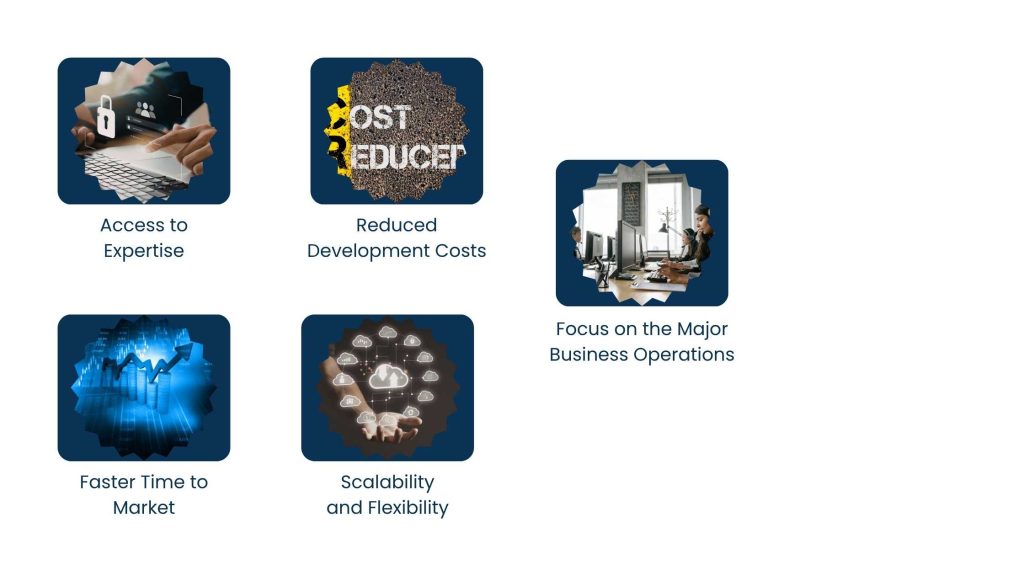
- Access to Expertise
Professional software developers are able to offer years of experience at the table. They realize the intricacies of high-performance software product development and are able to prevent pitfalls. Experts are involved in the process to select the appropriate tech stack, maintain the code in a secure environment, and so on.
- Faster Time to Market
The development of a software product is time-consuming. Outsourcing development allows the business to use an experienced team that has an agile development process. Agile practices such as Scrum and Kanban can be used to simplify the workflow and make sure that the details of the product are introduced in the iterative manner.
- Reduced Development Costs
Outsourcing software development saves on overhead expenses such as staffing, training, and infrastructure. Hiring a development team with the appropriate skill sets helps businesses to save money that would be used to develop an in-house team and concentrate resources on the development of the core business.
- Scalability and Flexibility.
The more your business expands, the more your software is required. The services of professional software development will provide the service with scalability in mind when developing the product. Increasing users, increasing data, or increasing complexity; outsourced teams possess both the means and expertise to modify the product to suit them.
- Focus on the Major Business Operations.
By outsourcing the software development process, the business can concentrate on the core processes, including sales, customer support, and marketing, while the development experts are able to work on the technical side of the product. This separation of labor will guarantee increased productivity and efficiency of the business.
Stages of Software Product Development
Software product development is a complicated process that comprises a number of critical stages. This is the summary of the main stages:
1. Ideation and Market Research of the product
When launching the software product development lifecycle, it is important to know the market and the customer’s needs. The step is to state what problem your product will address and what value it will bring to the users.
The important activities in this stage are:
- Carrying out market research to find out the pain points of customers.
- Competitor product analysis to determine gaps or areas of improvement.
- Figure out the users of the product and the reasons by defining user personas and use cases.
- Testing of the product idea in terms of surveys and focus groups, or testing a prototype.
This phase establishes the basis of the success of the product and makes sure that the product development is geared towards business objectives.

2. UI/UX Design
After validating the product concept, the second thing is to design the user interface (UI) and user experience (UX). A good UI/UX design will ensure that your product is easily usable, friendly, and attractive.
Key elements include:
- Wireframing: Developing simple wireframes to trace the structure and the flow of the product.
- Prototyping: Creating a clickable prototype to test the interaction between the product and the users.
- Usability testing: Seeking user feedback to develop the design.
A business making its product easy and pleasant to use makes the product not only practical, but also simple and enjoyable to operate with as a result of its attention to user experience.
3. Development and Coding
This is the stage when the real product development commences. Programming languages and frameworks applied by developers correspond to the requirements of the product.
The coding stage could be divided into:
- Front-end development: Creation of the user interface of the application (UI elements and interactive aspects).
- Back-end development: The evolution of server, database and application logic, underlying the product.
- API development: Adding third-party applications or creating a set of APIs that allow flowing data among systems seamlessly.
This stage is the development of a working product that is within the specifications of what had been outlined during the planning and design phases.
4. Quality Assurance (QA) and Testing
The product should also be subjected to proper testing before it is released in the market to make sure that the performance, security, and functionality are as per the desired standards.
Key types of testing include:
- Unit testing: Code inspections of parts or units of code.
- Integration testing: This should be made to ensure the various components of the system operate in harmony.
- User acceptance testing (UAT): Testing the product on real users so as to ascertain its suitability to the user needs and expectations.
Quality checking is essential in eliminating bugs, security loopholes, and usability problems, which may cause user experience and product performance.
5. Deployment and Launch
After testing, the product will be deployed. This phase involves:
- Preparing the infrastructure: The provision of readiness to serve traffic and data of the product by servers, hosting environments, and cloud services.
- Data migration: Moving old data into the new system, where necessary.
- Launch preparation: The development of marketing materials, onboarding material and customer support preparation.
- Go-live: Publicly launching the product to the users and starting to track the performance.
6. Post-Launch Support and Maintenance
The product requires continual maintenance and support after the launch. This includes:
- Bug fixes: The handling of any problems or bugs detected by the users after launch.
- Product updates: Frequently introducing new features, additions, or profitability to suit the changing needs of the users.
- Customer feedback: Gathering and implementing feedback from users to keep improving the product.
The post-launch services make sure that the product is maintained, safe, and is in sync with the market requirements.
Also Read: Best Real Estate Virtual Assistant 2026
Choosing the Right Software Product Development Partner
In picking out a software product development provider, the following factors have to be taken into consideration:
- Experience and expertise: Select a provider with a similar experience in creating similar software products, and hopefully in your industry.
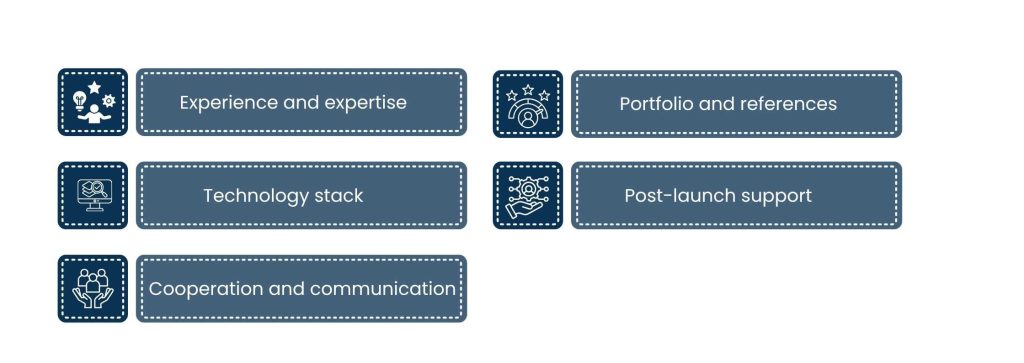
- Technology stack: Make sure that the development team is experienced with the technologies needed by your product (e.g., web development, mobile development, cloud technologies).
- Cooperation and communication: An effective development team must be responsive, transparent as well as easy to communicate with during the development process.
- Portfolio and references: Look back at the previous projects and customer references of the provider to determine the quality of their work.
- Post-launch support: Make sure that the provider provides continuous support and maintenance to deal with post-launch product issues.
Selecting an appropriate software product development partner is very important in making your project successful. Find a team that not only possesses technical competencies but also has the knowledge about your business objectives.
Conclusion
The development services of software products assist businesses in transforming their ideas into scalable, high-performing, and successful software products. These services encompass all the product lifecycle phases, such as ideation and design, development, testing, and post-launch support.
With the help of the appropriate development team, businesses are able to develop their own solutions, which meet their particular market needs, can provide them with a better user experience, and can be expanded should the business expand.
At Tasks Expert, we specialize in end-to-end software product development services that are guaranteed to achieve customer expectations, scale, and be secure. Regardless of whether you are developing a mobile application, SaaS, or a bespoke piece of software, we can assist you in developing a product that will contribute to growth and create value for users.
Frequently Asked Questions
These are business professional services that assist businesses in designing, developing, launching, and maintaining software products in their lifecycle.
This timeline depends on the complexity of the product; however, it usually takes between several months and up to a year.
Yes, most companies have decided to outsource software development to people that have specialized skills and saves overhead expenses.
Those technologies are reliant on the product, yet popular tools are web development frameworks, mobile apps, cloud computing technologies, and APIs.
Find a provider that has a relevant industry experience, has a good portfolio, has a clear plan that can be developed, and has suitable technical expertise.
About Us
Tasks Expert offers top-tier virtual assistant services from highly skilled professionals based in India. Our VAs handle a wide range of tasks, from part time personal assistant to specialized services like remote it support services, professional bookkeeping service etc. Furthermore, it helps businesses worldwide streamline operations and boost productivity.
Ready to elevate your business? Book a Call and let Tasks Expert take care of the rest.

About Author

Gary Katz
Related Blogs